Michel Foucault and the History of Madness Panel
Patrick Chambon's 2024 graphic novel Michel Foucault: Histoire de Folie (History of Madness) — selections from which are on display at UC Berkeley's Townsend Center for the Humanities through May 2026 — is a vivid, embodied version of Foucault's groundbreaking text. Foucault becomes a character in his own story, exploring the cruelties, absurdities, and power dynamics embedded in society's treatment of madness.
In conjunction with the Townsend Center's exhibition, the speakers in this video explore the subject of madness in the work of renowned French philosopher Michel Foucault.
[Please note that due to technical problems, James Porter’s introduction is not included in the video. The text of his introductory remarks can be found below, after the panelists' biographies.]
PANELISTS
Artist and author Patrick Chambon was born in Paris and studied at the École des Arts Décoratifs in Monaco and the École des Beaux-arts in Toulouse and Lorient. His art has been widely exhibited in France, including at Galerie La Nave Va in Marseille, Villa Tamaris in Toulon, and Musée de Vence. He has published graphic novels on the work of Jacques Lacan and Oscar Wilde, and on the progressive unveiling of the female body in Western painting. The Townsend Center is pleased to host the first American exhibition of Chambon's work.
Lynne Huffer is Samuel Candler Dobbs Professor of Philosophy at Emory University. She is the author of a trilogy on Foucault’s ethics of eros: Mad for Foucault (2010), Are the Lips a Grave? (2013), and Foucault’s Strange Eros (2020). She is the winner of the Modern Language Association's Florence Howe Award for feminist scholarship in English. She is also a collage and installation artist whose latest book, These Survivals: Autobiography of an Extinction, brings together philosophy, memoir, poetry, and original multimedia art.
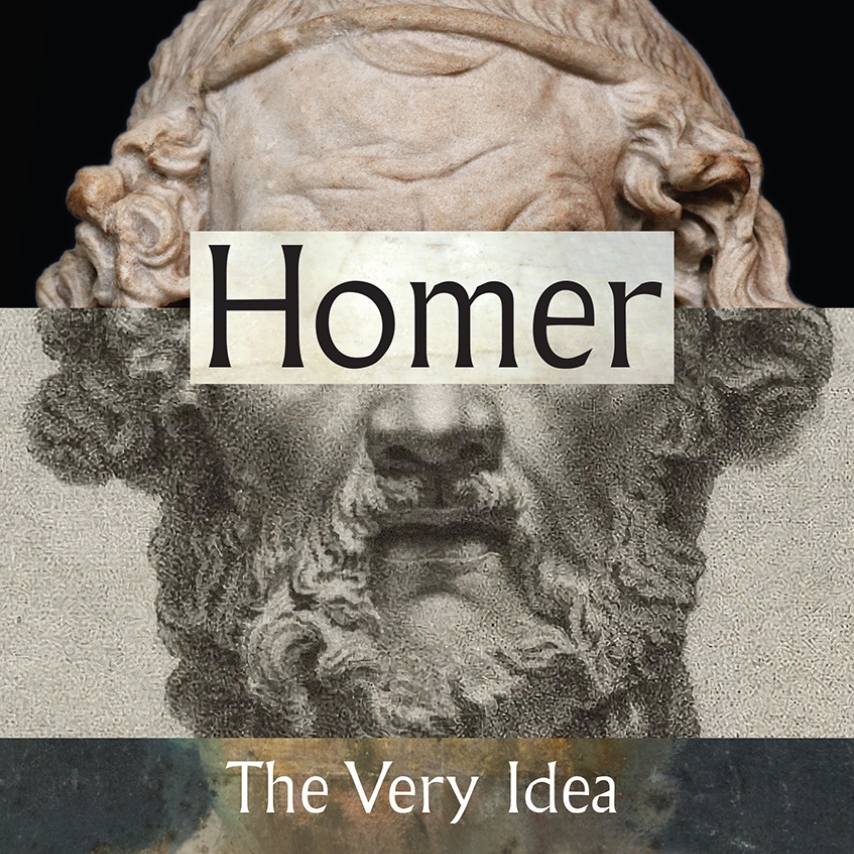
James Porter is Irving Stone Professor in Literature and Distinguished Professor in Rhetoric. His teaching and research interests include models of aesthetic sensation in ancient Greece and Rome; the work of Friedrich Nietzsche; Michel Foucault (most recently, Foucault's engagement with the Cynic traditions); and Jewish literary and critical thought. His most recent book is Homer: The Very Idea (2021), which considers Homer not as a man, but as a cultural invention nearly as distinctive and important as the poems attributed to him. Porter is co-editor of the Oxford University Press "Classical Presences" series.
INTRODUCTION by JAMES PORTER
Foucault’s History of Madness is in many ways the founding text of Foucault’s entire œuvre. Published in 1961 as his doctoral thesis under the direction of Georges Canguillhem, weighing in at close to 600 pages, the text has been reissued in various forms, with altered titles, new prefaces, and new appendices, with one abridgment in 1964 and one re-enlarged edition in 1972. A complete translation into English appeared only in 2006. We are just beginning to make sense of this epochal work, thanks in part to scholarship like that by Lynne Huffer (Mad for Foucault: Rethinking the Foundations of Queer Theory, from 2010) and, this year, the artwork of Patrick Chambon.
I say “just beginning” for one further reason: Foucault’s archives have yielded up a rich store of earlier course notes from the mid-1950s that paved the way for his 1961 masterpiece and are now being published at a rapid pace. His manuscripts on Ludwig Binswanger, the Swiss exponent of existential analysis (psychoanalysis in a Heideggerian vein), dating from 1952-54, published only in 2021, and just translated into English this year; his course on Phenomenology and Psychoanalysis from 1953-54, likewise published in 2021 but not yet available in English; as well as two related courses, one titled La Question Anthropologique from 1954-55 and published in 2022, and another containing notes to seminars on Nietzsche from the first half of the 1950s, with a section on “psychology.” To this list we should add Foucault’s first book, titled Maladie mentale et personnalité from 1954, partially reprinted and augmented in 1961 under the title Maladie mentale et psychologie; his introduction to Binswanger’s Dream and Existence (1954); and his introduction to Kant’s Anthropology, written in 1961 and published in French and English only in 2008.
Suffice it to say that our understanding of Foucault is a work in progress. Many additional personal and seminar notes have yet to be published from the archives, and our picture of his earliest and later formations is evolving by the year. What stands out at the present time is an unusual constellation of influences and ideas: psychoanalysis, psychology, mental ailments, dreamwork, the science and the question — the anthropology — of “man” (the human), Kant, and Nietzsche. Other subterranean reference points further below the surface include Heraclitus (surprisingly), Bataille, Sade, and Artaud.